Custom padel rackets require much more than adding a logo to an existing product. A successful racket project depends on clear product positioning, the right material selection, controlled prototyping, stable production processes, and reliable quality inspection.
As padel continues to grow across Europe, the Middle East, Latin America, and other international markets, more sports brands, importers, distributors, and clubs are looking for reliable ways to develop their own racket lines. One of the most common questions buyers ask is simple: how are custom padel rackets actually made?
At Caston Sports Manufacture Co., Ltd., we support global B2B customers with OEM and ODM racket development. With in-house production control, years of manufacturing experience, and expanding global service capability, we help customers bring custom racket ideas into scalable production.
In this article, we explain how custom padel rackets are made, from concept to mass production.
1. Product Planning Comes First
Before production begins, the first step is to define what kind of racket needs to be developed.
A custom padel racket project normally starts with product positioning. Buyers need to clarify:
- Who the target players are
- What market segment the racket is for
- What price range the product should fit
- What performance features matter most
- What level of customization is required
- What packaging and branding standards are expected
This stage is important because a racket for beginner players will be very different from one designed for advanced or competitive users. The shape, weight, balance, material combination, and surface treatment may all change based on the target market.
For B2B customers, planning also helps determine whether the project is better suited for:
- OEM padel racket production, where the buyer already has a design or specification
- ODM padel racket development, where the factory helps optimize the structure, materials, and final product solution
At Caston Sports, early project discussion helps reduce unnecessary revisions later and improves development efficiency.
2. Shape and Structure Define the Racket’s Identity
Once the product direction is clear, the next step is to define the racket structure.
A padel racket’s shape and internal design strongly affect how it performs on court. Key design points usually include:
- Racket shape
- Weight range
- Balance point
- Thickness
- Hole distribution
- Surface finish
- Handle construction
- Structural reinforcement
The three most common racket shapes are:
Round Shape
Round rackets usually offer better control and a larger sweet spot. They are often preferred by beginners and defensive players.
Teardrop Shape
Teardrop rackets provide a balance between control and power, making them popular for all-around play.
Diamond Shape
Diamond rackets typically deliver more attacking power and are often favored by advanced players.
At this stage, the goal is not only to design a racket that looks attractive, but also one that performs consistently and can be manufactured efficiently at scale.
3. Material Selection Directly Affects Performance
The materials used in a custom padel racket have a major impact on feel, durability, weight, and cost.
Common padel racket materials include:
Carbon Fiber
Carbon fiber is widely used in higher-performance rackets. It offers:
- Strong structural support
- Lower weight
- Better responsiveness
- More premium positioning
Fiberglass
Fiberglass is often used in more flexible and cost-effective rackets. It can provide:
- Softer touch
- Better comfort
- Easier handling for some players
- Lower production cost
EVA Core
EVA foam is a common core material in padel rackets. Depending on its density, it can influence:
- Ball output
- Shock absorption
- Control feel
- Power response
Composite Material Combinations
Some projects use mixed structures to balance price and performance. The final result depends on how the frame, face, and core work together.
At Caston Sports, material selection is based on the customer’s target market, product positioning, and performance goals. Rather than choosing one material in isolation, we look at the complete structure of the racket.
4. Branding and Visual Design Are Added to the Product
Custom padel rackets also need to reflect the customer’s brand identity.
Once the structure and materials are defined, the project moves into visual development. This can include:
- Logo placement
- Color matching
- Surface artwork
- Finish options
- Grip branding
- Label details
- Packaging design
For private label customers, this step is especially important. The appearance of the racket influences shelf appeal, online presentation, and overall brand perception.
However, visual design must also be practical for production. Some graphic effects may look appealing in digital files but may be difficult to reproduce consistently in large quantities.
That is why coordination between design and manufacturing teams is essential. In-house process control helps reduce communication gaps and supports better visual consistency in repeat orders.
5. Sampling and Prototyping Turn Ideas Into Physical Products
After design details are confirmed, a sample or prototype is produced.
This is one of the most important stages in the padel racket production process, because it allows the customer to review the actual product before full production starts.
During sample evaluation, buyers usually check:
- Overall appearance
- Weight and balance
- Grip comfort
- Surface texture
- Logo and graphic execution
- Material response
- Product feel compared with market expectations
In many cases, the first sample leads to further refinement. Common changes include:
- Adjusting the racket weight
- Changing the balance point
- Modifying the surface finish
- Updating artwork
- Refining grip details
- Improving feel through material changes
At Caston Sports, sample development is handled as a practical collaboration stage. The purpose is not just to produce a sample, but to make sure the product is aligned with the customer’s goals before mass production begins.
6. Testing and Quality Evaluation Come Before Mass Production
A custom sample should not go directly into full production without proper evaluation.
Before scaling up, the racket should be checked for key performance and quality factors such as:
- Weight consistency
- Balance accuracy
- Structural integrity
- Surface bonding
- Edge finishing
- Visual appearance
- Packaging confirmation
For buyers, the main concern is not just whether one sample looks good, but whether the same standard can be maintained across a full order.
This is where manufacturing capability becomes critical.
At Caston Sports Manufacture Co., Ltd., key production processes are controlled in-house. This reduces dependency on outsourced steps and helps improve consistency, communication, and production stability.
The company also works under structured management and compliance systems covering areas such as quality, environmental management, occupational health and safety, and social responsibility. For international B2B buyers, these systems provide additional confidence in long-term cooperation.
7. Production Preparation Sets the Foundation for Stable Output
Once the sample is approved, the project enters production preparation.
This stage usually includes:
- Raw material planning
- Tooling and process confirmation
- Final artwork approval
- Packaging setup
- Production scheduling
- Inspection standard setup
- Delivery coordination
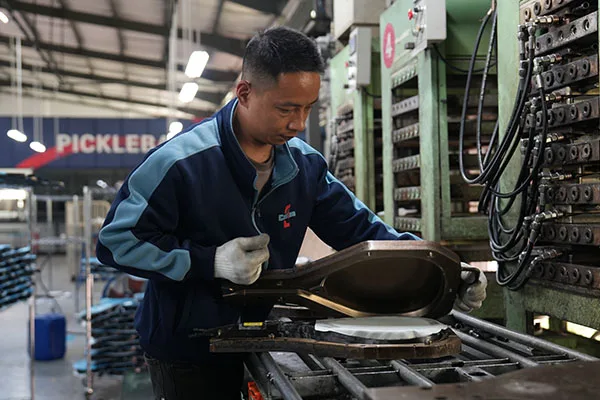
This is the transition from product development to volume production. The challenge is no longer making one successful sample, but making large quantities with stable quality.
A well-prepared production stage helps reduce:
- Material mismatch
- Color inconsistency
- Structural variation
- Packaging errors
- Delivery delays
With years of racket manufacturing experience and full-process production management, Caston Sports is positioned to support stable output for private label and OEM/ODM customers.
8. Mass Production Requires Control at Every Step
Mass production is where product design, manufacturing skill, and factory systems all come together.
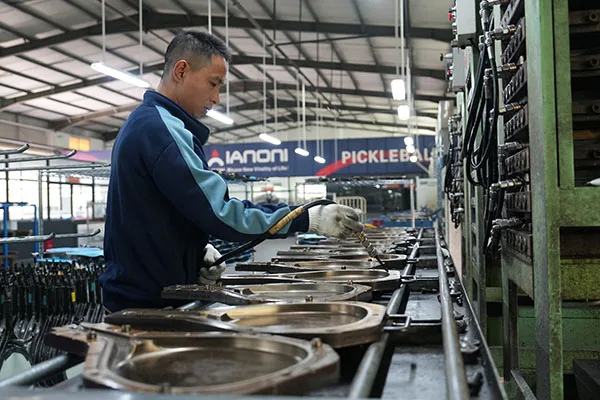
Although the exact process can vary depending on product structure, a typical custom padel racket manufacturing flow may include:
- Raw material preparation
- Core processing
- Surface layer preparation
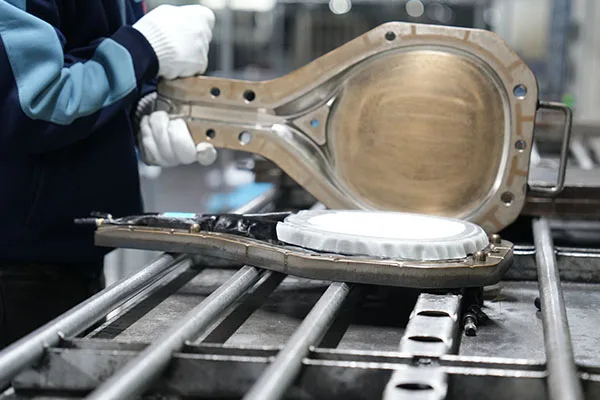
- Molding and forming
- Pressing or curing
- Trimming and shaping
- Drilling
- Surface treatment
- Painting or graphic application
- Handle assembly
- Final inspection
- Packaging
Small process differences can affect the final result. Variations in pressure, temperature, bonding, cutting, or painting may lead to quality issues if not managed properly.
This is why in-house production matters. When major production steps are managed internally, it becomes easier to trace issues, maintain standards, and improve efficiency.
Caston Sports emphasizes full-process manufacturing control, which is especially valuable for customers who need repeat orders, product line expansion, or long-term brand consistency.
9. Final Inspection Helps Protect Shipment Quality
Before shipment, all finished products should go through final inspection.
The purpose is to confirm that the order matches the approved standard in both appearance and physical condition.
Final inspection commonly checks:
- Logo accuracy
- Surface finish
- Structural condition
- Weight range
- Quantity correctness
- Packaging details
- Carton condition
- Shipping marks
For B2B customers, shipment quality is directly linked to brand reputation, customer satisfaction, and inventory reliability.
At Caston Sports, quality performance and delivery reliability are treated as core priorities. This is especially important for importers, retailers, and brand owners managing private label product lines.
10. Packaging and Logistics Complete the Project
Production is only one part of a successful order. Packaging and delivery are also essential.
Depending on customer requirements, packaging solutions may include:
- Individual racket packaging
- Retail-ready boxes
- Protective bag options
- Barcode labels
- Branded inserts
- Instruction cards
- Customized master cartons
On the logistics side, buyers may require:
- Direct export from China
- Consolidated shipment support
- Overseas warehouse coordination
- Multi-destination delivery planning
Caston Sports has also expanded its global service capability with international operational support, including a U.S. warehouse, U.S. office, and overseas coordination resources. For B2B customers, this can improve communication, logistics flexibility, and fulfillment efficiency.
11. Why the Right Manufacturer Matters
A successful custom padel racket is built through a combination of:
- Product understanding
- Material knowledge
- Engineering judgment
- Process control
- Quality inspection
- Branding support
- Delivery reliability
That is why choosing the right padel racket manufacturer matters just as much as the product design itself.
A strong manufacturing partner should be able to provide:
- OEM and ODM support
- Stable sampling
- Consistent production quality
- Efficient communication
- Quality management systems
- Custom packaging support
- Long-term cooperation potential
At Caston Sports, we combine in-house manufacturing, racket development experience, and international service support to help customers turn product ideas into market-ready racket programs.
Conclusion
The process of making custom padel rackets involves much more than basic customization. It requires thoughtful planning, proper material selection, accurate sampling, reliable testing, controlled mass production, and efficient logistics.
For sports brands, importers, distributors, and clubs, understanding this process can help reduce sourcing risk and improve product consistency. It also makes it easier to build a racket line that fits both market demand and brand positioning.
As the global padel market continues to grow, working with an experienced and reliable manufacturing partner becomes increasingly important. A supplier with in-house production control, OEM/ODM capability, and global support can make a clear difference in long-term business success.
If you are planning to develop your own padel racket line, Caston Sports is ready to support your project from design to mass production.
FAQ
What is the difference between OEM and ODM padel rackets?
OEM means the customer provides the design, branding, or specifications, and the factory manufactures accordingly. ODM means the factory provides an existing or adaptable product solution that the customer can customize under their own brand.
What materials are commonly used in custom padel rackets?
The most common materials include carbon fiber, fiberglass, EVA core materials, and composite structures. The final combination depends on the target market, performance goals, and budget.
How long does it take to develop custom padel rackets?
The timeline depends on the complexity of the project, number of revisions, and production planning. Sample development, approval, and mass production scheduling all affect the final lead time.
Why is in-house manufacturing important for padel racket production?
In-house manufacturing helps improve process control, quality consistency, communication efficiency, and delivery stability. It also reduces the risks that can come from relying too heavily on outsourced production steps.
What should buyers check before choosing a padel racket manufacturer?
Buyers should review the factory’s product experience, customization capability, sample quality, production control system, compliance standards, communication efficiency, and delivery reliability.
Looking for a reliable custom padel racket manufacturer?
Contact Caston Sports Manufacture Co., Ltd. to discuss your OEM or ODM padel racket project.
- How Custom Padel Rackets Are Made: From Design to Mass Production
- From Idea to Reality: Custom Pickleball Paddles with CASTON SPORTS
- Caston Sports Manufacture Co., Ltd. – Crafting Excellence in Padel Rackets
- How to solve the noise problem of pickleball paddle in terms of materials?- EVA pickleball paddle
- Analysis of the Global Pickleball Market Development Scale and Trends in 2023: Rising Market Demand